Loading...
Serving Rohnert Park, CA and surrounding areas. (707) 682-1628
Your deck, addition, or ADU needs footings built for Rohnert Park's clay soils and seismic requirements - not just the bare minimum. We handle permits, inspections, and the excavation depth the ground here actually demands.
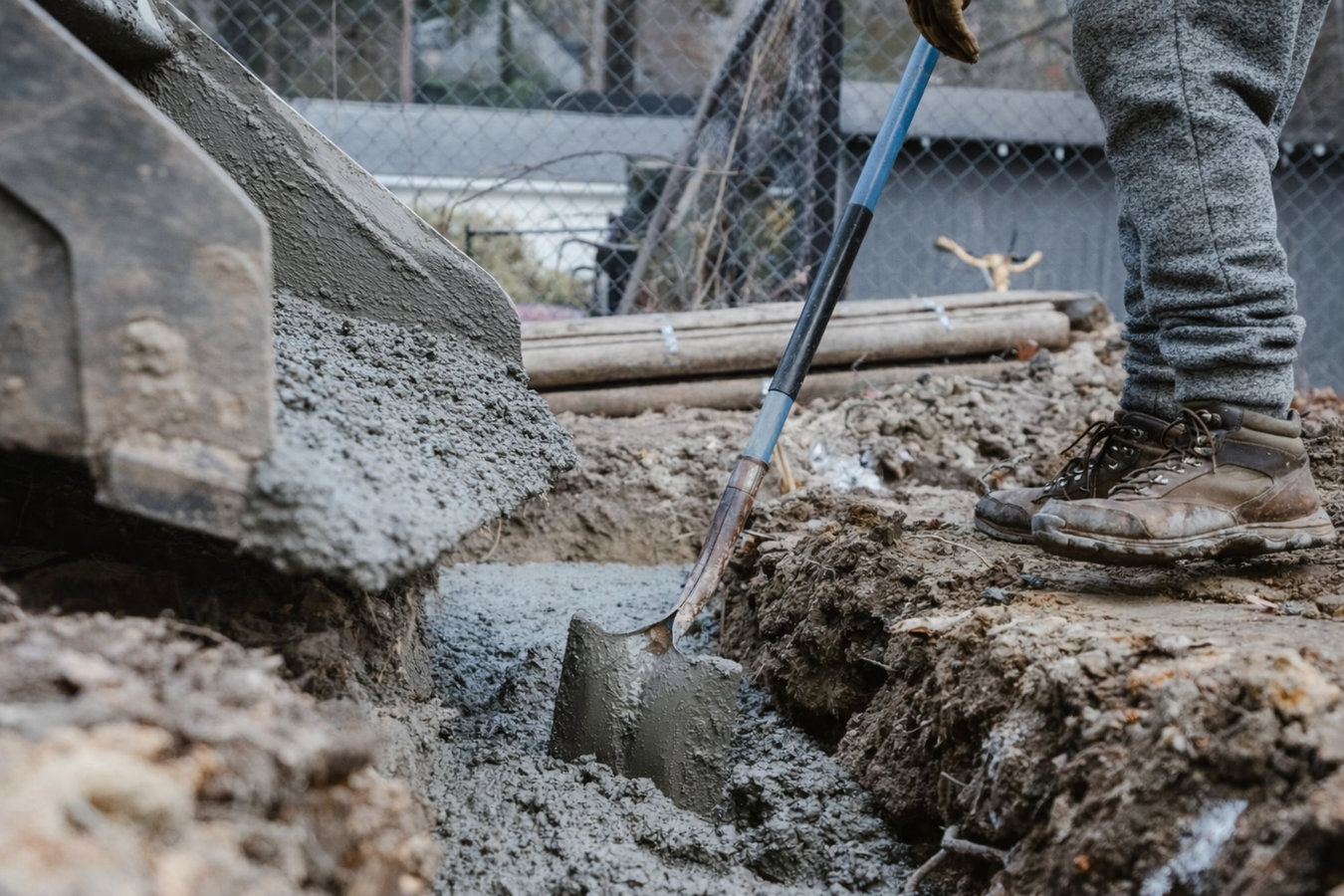
Concrete footings in Rohnert Park are the buried bases that hold up decks, additions, fences, and foundation walls - dug below the required depth, reinforced with steel, and poured to the size the structure and soil demand. Most residential footing projects involve one to two days of excavation and pouring plus a seven-to-twenty-eight day curing period before building begins.
The soil under most of Rohnert Park contains a significant amount of clay, which expands in winter rains and contracts in the dry summer months. That seasonal movement is one of the main reasons decks lean, fence posts tilt, and additions show cracking near the base in homes built here during the 1970s and 1980s. Footings sized and reinforced for those conditions, rather than for generic flat soil, are what the structure above actually needs.
If your project involves a new structure that sits on a slab rather than individual footings, our foundation installation service covers that work, and we can scope both in a single site visit.
These are the visible signs that your current footings have failed or that a new project needs proper ones before it can move forward.
If a deck post is no longer plumb, or a gap is opening between your porch and the house, the footing underneath may have shifted or settled. In Rohnert Park's clay soils, this is more common than homeowners expect, especially after a wet winter followed by a dry summer. A leaning post puts stress on the entire structure above it.
Fence posts set directly in soil without a proper concrete footing are especially vulnerable to Rohnert Park's wet-dry soil cycle. If your fence is visibly wavy, posts are tilting in different directions, or some posts seem to be rising while others sink, the original installation did not account for local soil conditions. Resetting posts with proper footings is a lasting fix.
When a footing shifts, the structure above shifts too, and one of the first places you notice it is in doors or windows that used to work fine but now stick, do not latch, or have visible gaps at the corners. This is especially worth investigating in older Rohnert Park homes where original footings may not have been built to current standards.
Any new structure needs proper footings before framing can begin, and the City of Rohnert Park will require a permit and a footing inspection before you can proceed. Getting footing work scoped and permitted early keeps your whole project on schedule. Rohnert Park's active ADU market means permit slots and contractor schedules fill up quickly.
We handle footing work for decks, room additions, accessory dwelling units, retaining walls, and fence systems. Every project begins with a site visit to assess the soil, the structure being supported, and the depth and size the conditions require. For Rohnert Park's clay-heavy soils, that typically means digging deeper and using more reinforcing steel than the bare code minimum - which is the approach the American Concrete Institute recommends for expansive soil conditions.
We pull the permit with the City of Rohnert Park's Building Division, schedule the required pre-pour inspection, and do not pour until the inspector has signed off. Before any digging starts, we call 811 to have underground utility lines marked - a step required by California law that protects your property and everyone on the job site. If your project also involves foundation raising or a full foundation installation, we can scope that work alongside the footings in a single estimate.
After the pour, we give you the permit sign-off documentation to keep with your home records. Permitted and inspected footing work is recorded with the county, which matters when you sell. Unpermitted work is one of the most common deal-killers in Rohnert Park real estate transactions, and everything we complete avoids that problem entirely.
Sized and reinforced for the loads and soil conditions of your specific yard, with post-anchor hardware set while the concrete is still wet.
Foundation footings for room additions and accessory dwelling units, designed and permitted to meet Rohnert Park's seismic and soil requirements.
Concrete footings for fence posts and freestanding walls that stay plumb through the clay soil's wet-dry movement rather than tilting every season.
Rohnert Park sits not far from the Rodgers Creek Fault, one of the more seismically active fault systems in the North Bay. California's building code requires that footings in this region be designed to handle ground movement, which typically means more reinforcing steel and specific footing dimensions. The city's permit inspection process is the practical mechanism that confirms this was done correctly - and it is a required step, not optional.
The city has also seen a meaningful increase in homeowners adding ADUs and room additions, driven in part by California's push to expand housing. That has kept local concrete contractors busy, which means lead times for scheduling can be longer than you might expect, especially in spring and summer. Calling a few weeks in advance and starting the permit application early is the best way to avoid delays that hold up your larger project.
We serve homeowners across the broader North Bay area, including projects in Santa Rosa, Petaluma, and Fairfield. The clay soils and seismic considerations are consistent across this region, and we bring the same depth of preparation to every project.
Here is each step from first call to a cured, inspected footing. We reply within 1 business day.
We come out to look at the location, assess the soil, and understand what the footing needs to support. You get a written estimate that breaks down labor, materials, and permit costs separately before any work begins.
We submit the permit application to the City of Rohnert Park Building Division on your behalf. Straightforward residential projects typically receive approval in one to two weeks. No digging starts until the permit is in hand.
We call 811 before any digging to mark underground utilities, then excavate to the required depth for your soil conditions. Forms are set and reinforcing steel is placed. At this point, the city inspector must come out to approve the work before concrete is poured.
Once the inspection is approved, we pour and finish the footing, setting any anchor bolts or post bases needed. Concrete needs at least seven days before framing begins and up to 28 days for full strength. We hand you the permit sign-off documentation when the job is complete.
We visit your site, assess soil conditions, and explain exactly what is needed and why. No surprises on the final bill.
(707) 682-1628We do not use a one-depth-fits-all approach. Rohnert Park's clay soils require deeper excavation and more reinforcement than many generic bids account for, and we adjust every footing to what the ground on your specific lot actually demands.
We know what the City of Rohnert Park's inspectors look for because we work with this office regularly. Your footing will be ready to pass inspection the first time, which keeps your deck, addition, or ADU project on schedule instead of waiting weeks for a re-inspection.
Every footing project we complete is fully permitted and inspected. That documentation stays with your home and protects your sale. Unpermitted work is one of the most common deal-killers in Rohnert Park real estate transactions, and it costs sellers significantly more to resolve after the fact.
You can look up our license number on the CSLB website in under two minutes. For work that is buried underground and invisible once complete, working with a licensed, insured contractor is the only way to protect yourself if something goes wrong years down the road.
A properly built concrete footing in Rohnert Park can last 50 to 100 years without any maintenance. The investment is in the design and the workmanship you cannot see once the concrete is poured. That is why getting the excavation depth, the steel placement, and the curing time right matters as much as the pour itself.
Lift and stabilize a settling foundation, addressing the underlying cause before more of the structure above is affected.
Learn moreFull foundation systems for new structures, ADUs, and additions requiring a continuous perimeter or slab rather than individual footings.
Learn moreCall or request an estimate today. The permit process takes time, and the earlier you start, the more control you have over your project timeline.