Loading...
Serving Rohnert Park, CA and surrounding areas. (707) 682-1628
Building a new home, major addition, or replacing a failing foundation? A properly designed and installed foundation - built for Rohnert Park's clay soils and seismic zone - protects every dollar you invest above it.
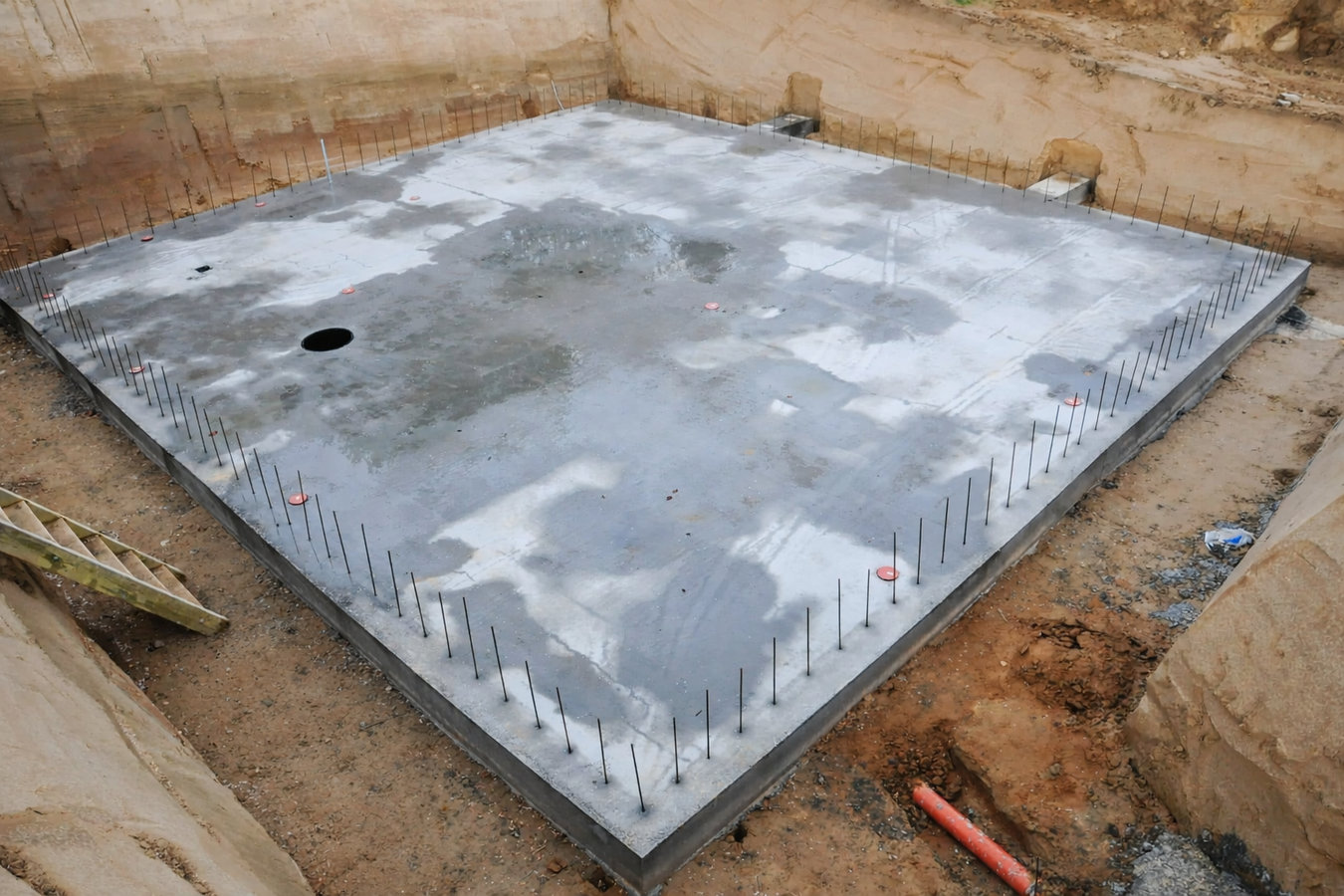
Foundation installation in Rohnert Park covers the full process of excavating, forming, reinforcing, and pouring a concrete foundation for a new home, major addition, or replacement project - most residential projects take four to eight weeks from contract signing to final city inspection.
A large share of Rohnert Park's housing stock was built in the 1960s and 1970s on standards that predate California's current seismic requirements. If you are building new construction or replacing an aging foundation, your project needs to meet today's code - including steel reinforcement designed specifically for the Rodgers Creek Fault zone and Sonoma County's expansive clay soils. A contractor who does not mention local soil or fault conditions during their estimate is leaving out the most important part.
For projects that also require a flat slab surface for a garage or ADU floor, our slab foundation building service covers that work alongside or as part of the broader foundation project.
Cracks running diagonally from the corners of door frames or windows - especially ones getting wider over time - indicate the foundation may be moving. In Rohnert Park, this is especially common in homes built in the 1960s and 1970s on clay soil that was not always adequately prepared. A crack that is growing is more urgent than one that has stayed the same size.
When a foundation shifts, the structure above it shifts too. Doors that drag on the floor, windows that no longer close flush, or gaps forming at the top corners of window frames are early warning signs homeowners in older Rohnert Park neighborhoods commonly notice. These are worth acting on before the movement gets worse.
Rohnert Park's wet winters can push water against your foundation if grading or drainage is off. Water sitting against foundation walls after a rainstorm - or damp, musty smells from a crawl space - can weaken concrete over time and create conditions for mold and wood rot in the structure above. Left unaddressed, it compounds into a larger problem.
If you are starting a new home, a large addition, or replacing an existing foundation entirely, you need a properly designed and permitted installation before framing can begin. In Rohnert Park, this requires a structural engineer's drawings, a building permit, and inspections at multiple stages - none of which your contractor should be asking you to skip.
We manage the full foundation installation process: permit application with the City of Rohnert Park Building Division, coordination with structural engineering if drawings are required, excavation and site preparation, steel reinforcement placement, city inspection at the steel stage, concrete pour, curing, backfill, and final inspection closeout. You receive a copy of the final permit sign-off for your records.
The most common foundation type we install in Rohnert Park is a reinforced concrete perimeter foundation - a continuous wall of concrete running around the outside edge of the structure, with interior footings at load-bearing points. For projects that also need a slab floor poured inside the perimeter, that work is done in the same project sequence. We also pair foundation installation with concrete parking lot building for commercial or mixed-use projects, and coordinate with slab foundation building for projects where the interior floor is part of the same scope.
Every foundation we install includes the steel reinforcement and anchor bolt placements required under California's seismic standards for the Rohnert Park area. This is not something we add as an option - it is standard on every project.
Suits new home construction and major additions requiring a full continuous perimeter foundation.
Suits older homes where the existing foundation has failed or no longer meets current seismic requirements.
Suits projects where both the perimeter foundation and an interior concrete floor are needed in one scope.
Rohnert Park was built rapidly in the late 1950s through the 1970s, and a significant share of its homes sit on foundations designed before California updated its seismic requirements. If you are replacing or reinforcing an original foundation on one of these homes, your contractor needs to bring the work up to current code - which affects both cost and timeline. This is not optional, and it is one of the most important questions to ask any contractor you are considering.
The clay-heavy soils on the Sonoma Valley floor also mean that foundation design here cannot be generic. Clay expands when saturated in winter and contracts in summer - a foundation that does not account for that movement will show it within a few years. Soil compaction, drainage, and reinforcement specifications all need to reflect what is actually in the ground at your site.
We work on foundation projects throughout the area, including Santa Rosa, Vallejo, and Napa - all markets with similar soil and seismic conditions to Rohnert Park.
The City of Rohnert Park Building Division requires inspections at multiple stages of foundation work, including a required visit before the concrete is poured to confirm the steel is correctly placed. This is actually good news for you - it means a city inspector is checking the critical work before it gets buried. A contractor who understands this process will have it built into their project schedule without any surprises.
We ask basic questions about your project and schedule a site visit within a few days. You receive a written, itemized estimate after the visit - not before. Accurate foundation pricing requires seeing the site.
We submit the permit application to the City of Rohnert Park Building Division. If structural engineering drawings are required, we coordinate that process. Permit approval typically takes one to three weeks. We keep you informed throughout.
Once the permit is approved, the crew excavates, sets up forms, and places the steel reinforcement per the engineering drawings. A city inspector visits before the pour to confirm the steel is correctly placed. This inspection is a checkpoint that protects you.
The concrete is poured, finished, and treated for proper curing. After the concrete reaches sufficient strength, forms are removed, the site is backfilled and cleaned, and the final city inspection closes out the permit. You receive a copy of the signed permit for your records.
We will visit your site, walk you through what the project involves, and provide a written estimate - no pressure, no obligation.
(707) 682-1628We design every foundation for the clay-heavy conditions of the Santa Rosa Plain and the seismic requirements that apply near the Rodgers Creek Fault. A foundation built for local conditions is what keeps a Rohnert Park home level and safe over decades.
We handle the permit application with the City of Rohnert Park Building Division, coordinate with the city inspector at every required checkpoint, and provide you with a copy of the final signed permit. You do not have to navigate the building department on your own.
We hold a current California Concrete Contractor license, verifiable on the CSLB website. We work in Rohnert Park and the surrounding Sonoma County market regularly - local permit timelines, soil conditions, and inspection requirements are not new territory for us.
Foundation projects in Rohnert Park typically run four to eight weeks from contract signing to final inspection. We provide a written, itemized quote after seeing your property - and we stand behind it. What this means for you is no surprises on the final invoice and a realistic project schedule from day one.
Foundation installation is the most consequential concrete work on any property. Getting it right - with the correct reinforcement, proper permit documentation, and inspections at every required stage - is what protects your home's value and your family's safety for the life of the structure. That is the standard we work to on every project.
For permit and inspection requirements in Rohnert Park, visit the City of Rohnert Park Building Division. For seismic hazard mapping in Sonoma County, see California Geological Survey Alquist-Priolo Fault Zone maps. For structural concrete standards, see the American Concrete Institute.
Concrete parking surfaces for commercial and multi-unit properties, installed with proper base prep and slope for long-term durability.
Learn moreResidential slab foundations for ADUs, garages, and room additions - engineered for Rohnert Park's clay soils and fully permitted.
Learn moreSpring booking fills quickly - contact us now so your permit is in before the dry season opens and your project stays on schedule.