Loading...
Serving Rohnert Park, CA and surrounding areas. (707) 682-1628
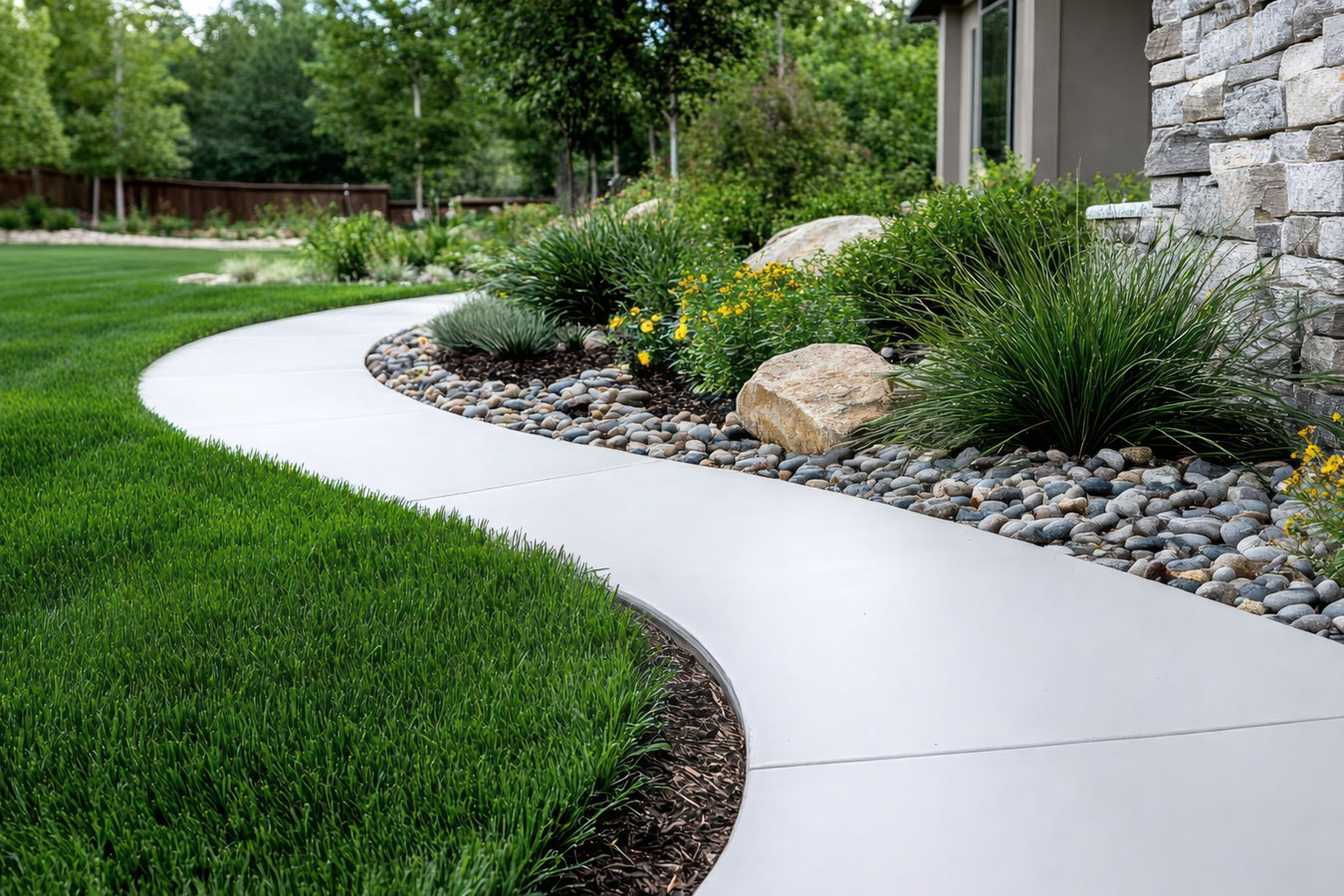
Cracked, heaved, or root-damaged sidewalks are a hazard every wet season. We build replacements on a proper base, handle every permit, and deliver a surface your family can walk on safely for decades.
Concrete sidewalk building in Rohnert Park means removing the old material, preparing a stable base for local soil conditions, and pouring a fresh slab - most residential walkway jobs take one day to pour, with three to seven days before the surface can be used again.
A large share of Rohnert Park homes were built between 1960 and 1985, and many of those original sidewalks are now 40 to 60 years old. Tree roots from mature street trees in older neighborhoods have had decades to grow under and lift those slabs. The clay-heavy soils here expand and contract every season, which adds to the problem. Once sections have heaved or cracked past patching, a full replacement is the right move.
If you are planning a full front-yard update, consider pairing a new sidewalk with concrete driveway building - both projects use the same crew and the same permit process, so coordinating them together saves time and usually reduces cost. Some homeowners also add a garage floor concrete pour at the same time to consolidate the job.
If one slab of your sidewalk sits higher or lower than the one next to it, creating a lip you have to step over, that is a tripping hazard - and it usually means the ground underneath has shifted. In Rohnert Park, this is especially common near mature trees whose roots have grown under the concrete over decades. This kind of damage tends to get worse each rainy season.
Hairline cracks are normal in older concrete, but when cracks are wide enough to catch a quarter on edge or you are pulling weeds out of them every spring, the slab's structural integrity is compromised. Rohnert Park's clay soils expand and contract with seasonal rain, and wide cracks signal that movement has been working on your sidewalk for years.
A properly built sidewalk slopes slightly so water runs off to the side. If you notice puddles sitting on your walkway after rain - or water draining toward your house - the slab has settled unevenly or was never graded correctly. Standing water accelerates surface wear and can eventually work its way under the slab.
If the top layer of your sidewalk is peeling off in flakes, developing rough pits, or crumbling at the edges, the surface has deteriorated past the point where patching helps. This kind of breakdown is common in sidewalks that are 30 or more years old - which covers a large portion of Rohnert Park's housing stock built in the 1960s through 1980s.
We build standard residential walkways in the 4-inch thickness appropriate for foot traffic, and we pour 6-inch slabs wherever vehicles will cross - like at the end of a driveway or across a garage approach. Every sidewalk we pour includes evenly spaced control joints to guide any future cracking into straight, predictable lines rather than random breaks across the surface. We finish sidewalks with a broom texture that provides traction in wet conditions, which matters given Rohnert Park's wet winters.
If your current sidewalk has lifted because of tree roots, we assess the root situation before pouring and can install a physical root barrier alongside the new slab. This adds to the project cost but is far less expensive than replacing the sidewalk again in five years. We will be straightforward with you about what we find and what options make sense for your specific property.
For homeowners doing a full front-yard update, we often combine sidewalk work with concrete driveway building in a single project. For homeowners who also want the garage addressed, we can include garage floor concrete in the same job, reducing scheduling overhead and often lowering total cost.
Best for homeowners who want a safe, durable replacement walkway that works in all weather.
Best for homeowners upgrading to a wider, more welcoming path from the street to the front door.
Best for homeowners in older Rohnert Park neighborhoods where mature street trees have already caused damage.
Rohnert Park was developed as a master-planned community starting in the 1960s, and many of its neighborhoods still have the original sidewalks from that era. Those 40- to 60-year-old slabs were poured to older standards on clay-heavy soil, and they show it. The expansive clay soils documented across Sonoma County expand when wet and shrink when dry, putting stress on concrete from below every single season. Any replacement sidewalk that skips proper base preparation will follow the same pattern as the one it replaced. Homeowners in Petaluma and Santa Rosa face the same soil conditions, and we serve both communities.
Tree roots are the other major factor in this area's older neighborhoods. Mature street trees near Golf Course Drive, Snyder Lane, and other established corridors have had 40 to 50 years to grow under sidewalk slabs. Replacing the concrete without addressing the roots is a temporary fix. We look at the root situation on every job and give you an honest recommendation on whether a root barrier makes sense for your property.
The City of Rohnert Park requires permits for sidewalk work near the street or in the public right-of-way. We handle permit applications and inspection scheduling before any work begins. This protects your investment and puts the work on record as code-compliant - something that matters if you sell. Homeowners in Novato have the same permit requirements, and we navigate that process there as well.
Reach out by phone or form and we respond within one business day. We schedule a site visit to measure the walkway, assess any root or drainage issues, and give you a written quote that breaks out demolition, base prep, and the pour - not just a single number.
If your sidewalk connects to the street or crosses the public right-of-way, we pull the required permit from the City of Rohnert Park before any work begins. We handle all city paperwork and schedule the inspection - you do not make a single call to the city yourself.
The crew removes the old concrete, hauls it away, compacts the soil, and adds a gravel base for drainage. Concrete is then poured, leveled, given control joints, and broom-finished in a single day for a standard walkway. This is the most disruptive day of the project.
Stay off the sidewalk for at least three to seven days. After curing, we schedule the city inspection - a straightforward step when the work was done to code. Once it passes, the sidewalk is ready for full use. We clean up the site and walk you through anything to watch for.
Free on-site estimate. We handle permits. Response within one business day.
(707) 682-1628We hold an active C-8 Concrete Contractor license through the California Contractors State License Board. In California, any concrete work over $500 in labor and materials requires a valid state license. Hiring an unlicensed contractor leaves you without legal protection if workmanship problems appear after the project.
We handle the permit application with the City of Rohnert Park and schedule the city inspection after the work is complete. You do not navigate city paperwork yourself. The finished project is documented as permitted and code-compliant - important for your own peace of mind and for any future home sale.
We look at the tree root situation before every front-yard pour in Rohnert Park - because mature street trees are the most common reason replacement sidewalks fail prematurely in this area. If a root barrier makes sense for your property, we will tell you plainly. If it does not, we will tell you that too.
We compact the soil and add a gravel drainage layer on every sidewalk we pour in Rohnert Park, because the expansive clay here makes base preparation non-negotiable. Contractors who skip this step are cutting costs at your expense - the surface may look fine at first but will crack and settle on the same cycle as the one it replaced.
A sidewalk that lasts in Rohnert Park needs more than concrete - it needs the right base, the right permits, and a contractor who has dealt with the soil and root conditions specific to this area. We have completed projects across Rohnert Park's neighborhoods and throughout the broader Sonoma County region, and we bring that experience to every job.
For California accessibility requirements on sidewalks connecting to public streets, see the Caltrans ADA compliance guidelines. For concrete installation standards, refer to the American Concrete Institute.
Pair a new front walkway with a freshly poured garage floor - combining both projects saves on mobilization and permit coordination.
Learn moreReplace your driveway at the same time as your sidewalk to give the entire front of your property a consistent, finished look.
Learn moreSpring slots fill fast and summer is peak season - reach out now to lock in your start date before the weather window closes.