Loading...
Serving Rohnert Park, CA and surrounding areas. (707) 682-1628
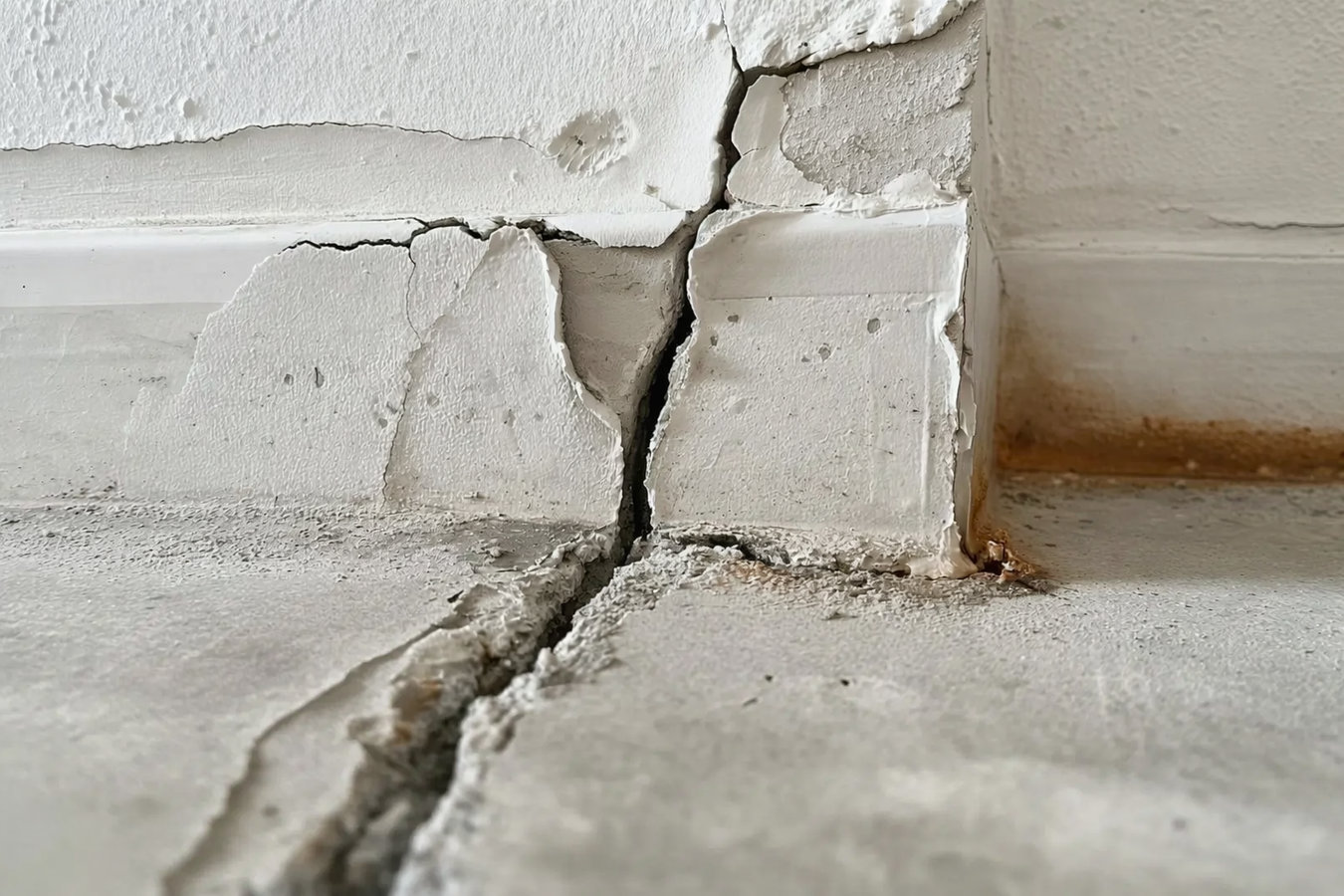
A settling foundation causes sticking doors, cracked walls, and sloping floors. We lift sunken concrete slabs back to level without tearing out your foundation.
A settling foundation causes sticking doors, cracked walls, and sloping floors. We lift sunken concrete slabs back to level without tearing out your foundation.
Foundation raising in Rohnert Park restores sunken or uneven concrete slabs by pumping material beneath them to fill voids and push the concrete back to level - most jobs are completed in a single day without tearing out the existing foundation.
If you have noticed doors that drag, floors that feel off-level, or cracks spreading from your window corners, your foundation may have dropped. These are not cosmetic problems - they signal that the soil beneath your slab has shifted and the structure above it is following. Foundation raising addresses the problem at its source rather than patching over the symptoms.
Raising an existing foundation costs a fraction of a full replacement. If your problem is more complex and involves broader structural work, our concrete cutting team can handle the access cuts needed before lifting begins.
If interior doors that once swung freely now drag on the floor or refuse to latch, your home may be shifting. A settling foundation changes the shape of the frame around the door. In Rohnert Park, this symptom often becomes more noticeable in late summer after months of dry weather have caused the soil to contract beneath the slab.
Diagonal cracks in drywall that radiate from the corners of door and window frames are a classic sign that part of your foundation has dropped lower than the rest. These differ from the small hairline cracks that appear in most homes over time. If the crack is wider than a pencil tip or has grown since you first noticed it, it is worth having a professional take a look.
Walk slowly through your home and pay attention to whether the floor feels level. A marble placed on the floor that rolls on its own is a simple test. Rohnert Park homes built in the 1960s and 1970s are particularly prone to this as decades of clay soil movement gradually push different parts of the slab in different directions.
Standing water collecting against your home's exterior after a winter rainstorm soaks directly into the soil beneath your foundation. Over time, this erodes soil support and creates the voids that cause sinking. In Rohnert Park's wet winters, this is a common early warning sign homeowners can spot before any interior symptoms appear.
We handle foundation raising using two proven methods: mudjacking and polyurethane foam injection. Mudjacking pumps a cement-and-soil slurry beneath the slab to fill voids and lift the concrete. Foam injection uses a lightweight expanding material that cures quickly, leaves smaller repair holes, and adds minimal weight to the soil. Your specific situation determines which method makes more sense - we explain both and give you a straight recommendation.
Before any lifting begins, we assess what caused the sinking. In Rohnert Park, the answer is usually one of three things: clay soil contraction, poor drainage against the foundation, or soil displacement from seismic activity. Understanding the cause is the difference between a repair that lasts and one that needs to be repeated in a few years. For homes where existing damage requires structural access cuts, concrete cutting can create clean openings without disturbing the surrounding slab.
For homeowners whose situation requires more than raising, we also work alongside slab foundation building when a section of the original foundation is beyond the point where lifting alone is sufficient.
The proven traditional method, suited for larger surface areas where cost efficiency matters most.
Ideal for homes with clay-heavy soils where added weight to the subgrade is a concern.
For foundations where voids have formed beneath without visible surface settling yet.
For properties where standing water near the foundation is the root cause of the settling.
Rohnert Park sits on Sonoma Valley soils with significant clay content. Clay swells when it absorbs rain and shrinks when it dries out, and that repeated movement is one of the leading causes of foundation settling in this area. Rohnert Park also has a Mediterranean climate with wet winters and very dry summers, which means the soil beneath your home expands in January and contracts in August, year after year. Homeowners here often notice foundation symptoms most clearly in late summer, when the soil has shrunk to its smallest volume and gaps beneath the slab are at their widest.
A large share of Rohnert Park's residential neighborhoods were developed between the 1960s and 1980s, which means many homes are now 40 to 60 years old. Foundations from that era were built to the standards of their time, and decades of soil movement, moisture cycling, and seismic activity have taken a toll. The North Bay also sits in a seismically active region, with several fault systems running through Sonoma County. Even moderate earthquakes can shift soil and create voids beneath foundations that were previously stable.
We serve homeowners throughout Rohnert Park's neighborhoods and the surrounding region. Our crews regularly work in Santa Rosa, Petaluma, and Napa, and we understand the soil conditions and permit requirements that come with each area.
The Concrete Foundations Association sets the professional standards that guide how foundation repair work is evaluated and performed. Contractors familiar with these standards are working to a recognized benchmark. The USGS Earthquake Hazards Program provides current data on seismic activity in the North Bay region, which is useful context for any homeowner dealing with foundation movement.
Tell us about sticking doors, cracks, or uneven floors. We respond within one business day and schedule a site visit at a time that works for you.
We walk your property, measure floor levelness, check for cracks, and assess soil conditions around the perimeter. You receive a written estimate before committing to anything.
We handle the City of Rohnert Park permit application on your behalf. Permit approval on a straightforward residential project typically takes one to two weeks.
The crew drills small holes, injects the lifting material, monitors the rise to the correct level, then patches the holes. Most homeowners can use the repaired area the same day.
No pressure, no obligation. We come to your home, assess what is happening, and give you a straight answer. Most jobs are completed in a single day.
(707) 682-1628Rohnert Park's housing stock was built primarily between the 1960s and 1980s, and we have worked on foundations across all of those eras. We know how the local clay soils behave through Sonoma County's wet-dry cycle and what that means for a repair that actually holds.
Foundation raising in Rohnert Park requires a city permit and inspection. We handle the application, coordinate with the Building Division, and make sure the completed work is documented. That record protects your home's value when you sell.
We will tell you honestly if raising will solve your problem or if something more is needed. We will also tell you if the problem is smaller than you feared. Our goal is a repair that lasts, not a job that is bigger than it needs to be. Verify any California contractor's license at the California Contractors State License Board.
Foundation raising is not the kind of project that turns your home into a construction zone for weeks. Most Rohnert Park jobs are completed the same day the crew arrives, with minimal mess and no need to leave your home. You can use the repaired surface before the truck leaves the driveway.
Every job we take on in Rohnert Park starts with an honest on-site assessment and ends with before-and-after measurements you can see for yourself. We handle the permit paperwork, pull from local knowledge of Sonoma County clay soils, and give you a repair built to last through the seasonal cycles this region puts on every foundation.
Precise slab and wall cuts for drainage, utility access, or section removal before foundation work begins.
Learn moreWhen a section is too far gone to raise, we form and pour a new slab to the correct grade.
Learn moreEvery season your slab goes unrepaired, the voids beneath it grow larger. Call Rohnert Park Concrete now and most jobs are on the schedule within the week.