Loading...
Serving Rohnert Park, CA and surrounding areas. (707) 682-1628
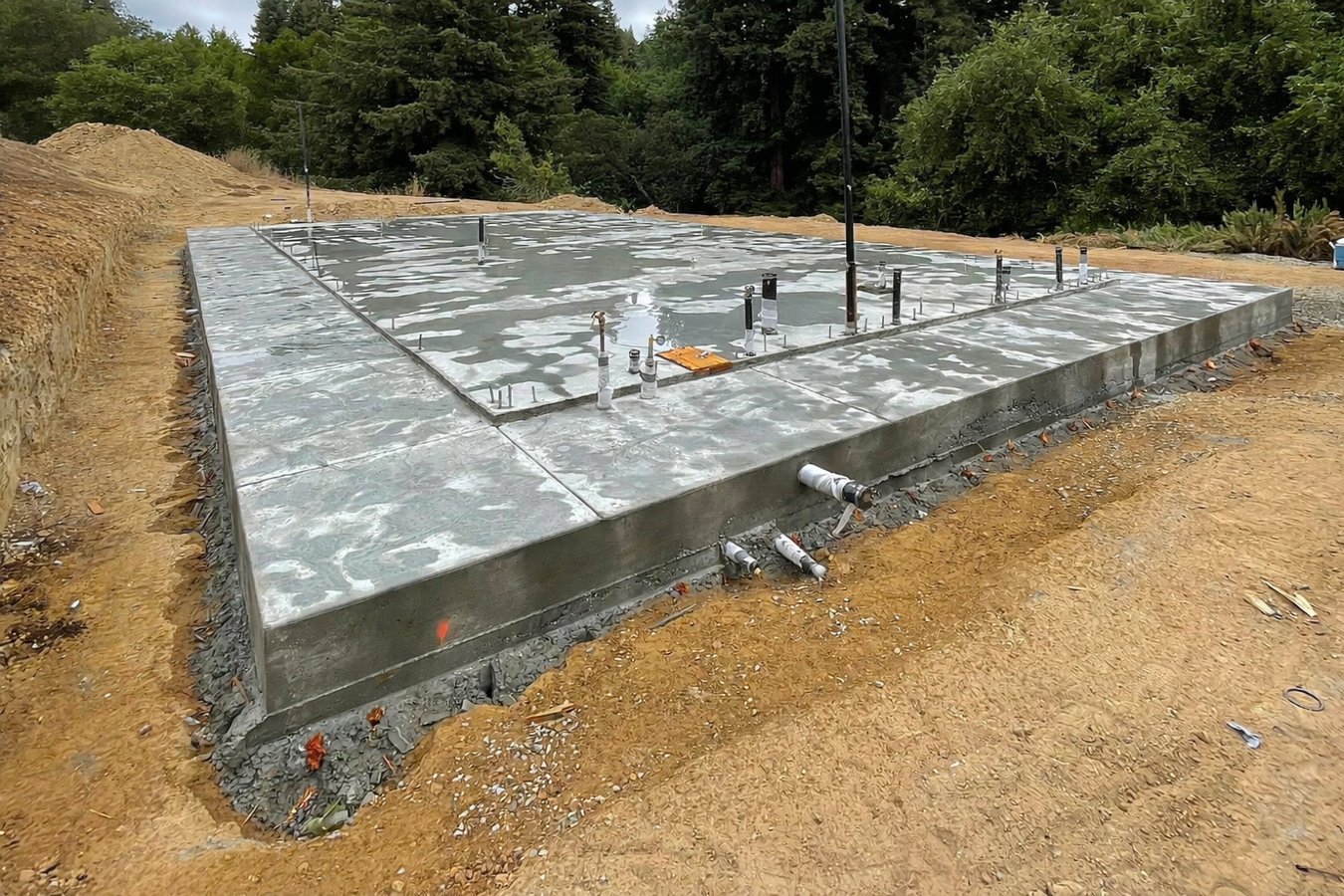
Planning an ADU, garage, or new construction in Rohnert Park? A properly engineered slab, built for local clay soils and seismic conditions, is the foundation everything else depends on.
Slab foundation building in Rohnert Park means pouring a reinforced concrete base directly on prepared ground - most residential slabs take two to five days of physical work, with a full timeline of three to six weeks once permits and inspections are factored in.
Rohnert Park sits on clay-heavy soils in the Sonoma Valley, and those soils expand and contract with the seasons. Every slab we pour is designed with that movement in mind: compacted subgrade, a gravel drainage layer, and more steel reinforcement than you might see in lower-demand markets. Skipping any of those steps is how slabs crack or settle within a few years.
Whether you are building a new ADU, a detached garage, or extending your home with an addition, this project starts with a solid foundation. If you are also planning stairs or entry features for that structure, our concrete steps construction services cover that work.
Diagonal or wide cracks running across an existing concrete floor - rather than along control joints - suggest the slab has shifted or settled unevenly. In Rohnert Park, the clay-heavy soils expand in winter and shrink in summer, and over decades that movement causes older slabs to crack in ways that go beyond normal wear. A crack you can fit a quarter into is worth having a contractor assess.
When a slab moves, the walls and door frames above it move too. Doors or windows that have started sticking, dragging, or no longer closing flush - especially if this happened gradually over a year or two - can indicate the slab beneath has shifted. This is a common complaint in Rohnert Park homes built in the 1960s and 1970s on soil that was not always adequately compacted.
White, chalky deposits on your concrete floor - especially in a garage - indicate water is wicking up through the slab from the ground below. This happens when the moisture barrier has failed or was never installed properly. Left unaddressed, it can damage flooring, encourage mold growth, and signal that the slab may be deteriorating from below.
If you are planning to add a detached ADU, a room addition, or a garage to your Rohnert Park property, that new structure needs its own slab and its own permit. The city has seen a significant increase in ADU construction in recent years, and every one of those projects starts with a properly permitted, inspected slab.
We handle the full slab foundation building process from start to final inspection. That means pulling the permit from the City of Rohnert Park Development Services department, grading and compacting your site, placing the gravel base and moisture barrier, setting steel reinforcement, scheduling the city pre-pour inspection, and pouring and finishing the slab. You do not need to coordinate any of that separately.
Our most common projects are garage slabs, ADU foundations, room addition pads, and new construction slabs for detached structures. Each one is designed specifically for your lot conditions. We also pair slab work with concrete footings for projects that require deeper structural support at load-bearing points, and with foundation installation for full perimeter foundation projects on new homes or major additions.
After the slab is poured, the concrete is treated or covered to cure slowly and reach full strength. You will know exactly when it is safe to walk on it and when framing can begin. We do not leave that ambiguous.
Suits ADUs, garages, and room additions - full permit and inspection included.
Suits detached structures and new builds requiring an engineered, permitted slab.
Suits projects with load-bearing wall locations that need deeper edge support.
Most of Rohnert Park was built between 1960 and 1985 as a planned community on the Sonoma Valley floor. The soils here contain a significant amount of clay, which swells when wet and contracts in dry weather. That seasonal cycle puts more stress on concrete foundations than stable, sandy soils do - which is why slabs in this area require more thorough soil compaction, a deeper gravel base, and more steel than you might see in other California markets. Any concrete slab contractor pricing a slab in Rohnert Park without asking about site soil conditions is skipping a step that matters.
Rohnert Park also sits in a seismically active region of Northern California, close to the Rodgers Creek Fault. California building standards require that foundation slabs in this area include specific reinforcement patterns and anchor bolt placements that tie the structure to the foundation. This is not optional. An inspector from the City of Rohnert Park will check for it before the concrete is poured.
We serve homeowners throughout the area, including neighboring communities like Santa Rosa, Petaluma, and Fairfield - all areas where similar soil and seismic conditions apply.
The permit window matters here too. Rohnert Park gets most of its rain between November and March. Concrete cannot be poured on saturated ground, so the practical build season runs from roughly April through October. If you are planning an ADU or addition, starting the permit application in late summer gives you the best chance of getting your slab poured before the rains arrive.
Call or send a message with the basics: what you are building, approximate size, and whether you have plans or permits yet. We respond within one business day and schedule a free on-site visit.
We walk your property, check slope and soil conditions, and confirm concrete truck access. You receive a written, itemized quote - no surprises on the final invoice.
We submit the permit application to the City of Rohnert Park Development Services on your behalf. Once approved - typically one to three weeks - we schedule the required pre-pour inspection.
The crew excavates, grades, and compacts the soil, lays the gravel base and moisture barrier, sets the steel, passes inspection, and pours the slab. We cover or treat the concrete for proper curing and tell you exactly when it is ready for framing.
We will visit your property, assess site conditions, and give you a written estimate - no obligation, no sales pitch.
(707) 682-1628We design every slab for the Santa Rosa Plain's expansive clay conditions - heavier compaction, a proper gravel base, and more steel reinforcement than lower-demand markets require. That is what keeps your slab level five and ten years from now.
We manage the City of Rohnert Park permit application, coordinate the required pre-pour inspection, and provide you with a copy of the closed permit. You do not have to become an expert in building codes to get this right.
Rohnert Park Concrete holds a current California Concrete Contractor license, verifiable on the CSLB website. Hiring a licensed contractor is your protection if something goes wrong - and it is required for permitted work in Rohnert Park.
We schedule slab pours during Rohnert Park's dry season whenever possible and monitor forecasts closely in shoulder months. Concrete poured on wet or unstable ground is a problem that does not announce itself for years - and one that is entirely preventable.
A slab built correctly the first time - with the right soil prep, steel, and inspections - is one of the lowest-maintenance things on your property. A slab built with shortcuts costs you years of repair calls. We work in Rohnert Park and the surrounding Sonoma County market every day, and our reputation depends on getting this step right.
For technical standards on residential concrete, see the American Concrete Institute. For permit requirements specific to Rohnert Park, visit City of Rohnert Park Development Services. For seismic hazard information, see the California Geological Survey.
Full perimeter foundation installation for new homes and major additions, engineered for Rohnert Park's seismic and clay-soil conditions.
Learn moreIsolated and continuous concrete footings for load-bearing walls, posts, and structures that need deeper bearing support beneath your slab.
Learn morePermit season fills quickly each spring - contact us now to lock in your start date before the dry-season window closes.